
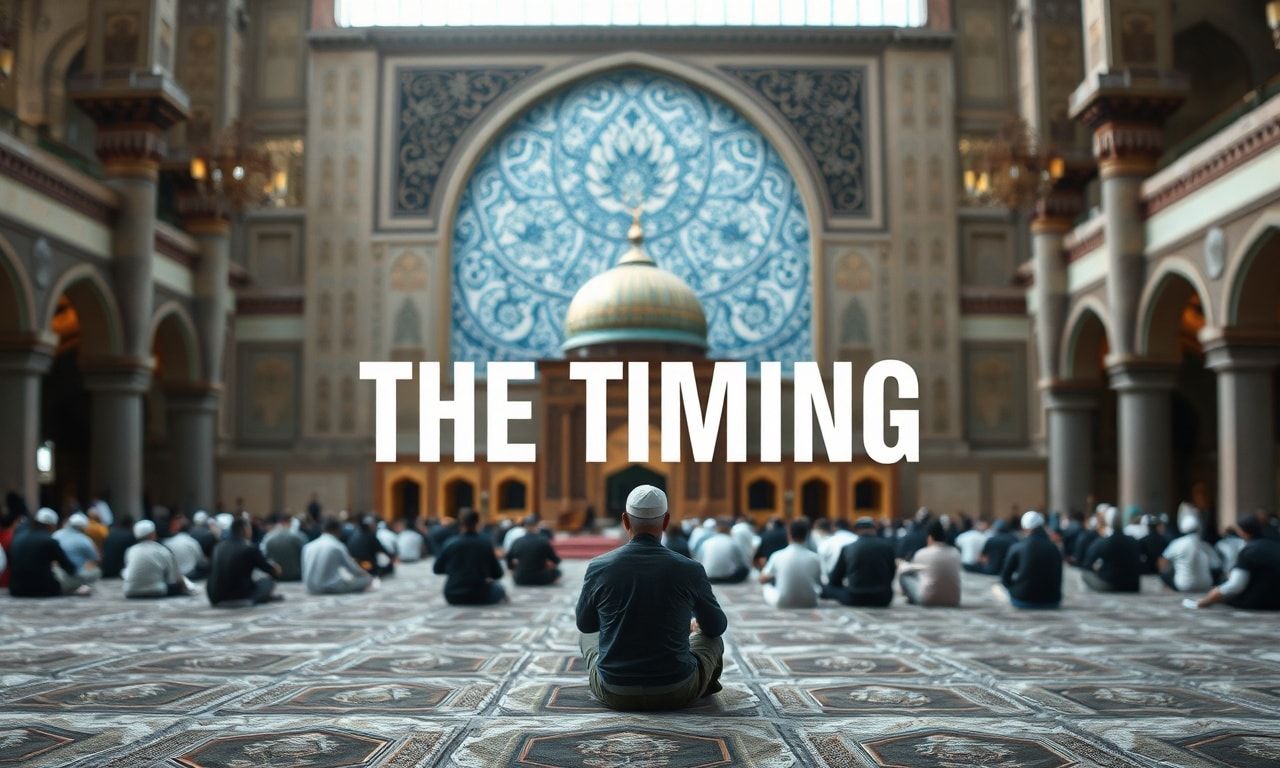
I remember it like it was yesterday. June 14th, 2018, Istanbul. I was sitting in a tiny café near the Blue Mosque, sipping on my Turkish tea, when the call to prayer echoed through the streets. The ezan vakitleri, as they call it here, disrupted my train of thought, but in the best way possible. It got me thinking about how prayer schedules shape daily life, not just here, but around the world. Honestly, I’d never given it much thought before. I mean, I knew prayers were important, but the rhythm, the timing, the discipline—it was all new to me.
So, I started digging. I talked to people, read books, and even tried to follow a prayer schedule myself. And look, I’m not saying I became a devout prayer warrior or anything, but I did learn a thing or two. Like how in some parts of the world, the call to prayer is a regular interruption, a reminder to pause and reflect. In others, it’s a secret, a quiet moment between the individual and their faith. And the science behind it? Well, that’s a whole other story.
This isn’t just about religion, though. It’s about routine, about discipline, about finding balance in a world that’s always on the go. So, let’s explore this, shall we? From the clockwork of faith to the science of spiritual timing, we’re going to take a deep dive into how prayer schedules shape our daily lives. And who knows? Maybe, like me, you’ll find a new appreciation for the art of balancing work, life, and worship.
The Clockwork of Faith: How Prayer Times Tick Around the World
I remember the first time I really noticed how prayer times could shape a day. It was 2008, Istanbul, and I was staying with my friend, Mehmet. I mean, honestly, the city just pulses around these times. The call to prayer—it’s like a symphony, really. And everyone, I mean everyone, just stops. Cars slow down, people pause mid-conversation, shops close their shutters. It’s like the city takes a collective breath.
But here’s the thing: prayer times aren’t just a Middle Eastern phenomenon. They’re a global rhythm, a clockwork of faith that ticks away in homes, mosques, and public spaces worldwide. And it’s not just Muslims, either. Look, I’m not an expert, but I’ve seen how different faiths structure their days around prayer. It’s fascinating, really.
Take, for example, the ezan vakitleri. That’s the Turkish term for prayer times, and it’s a great resource if you’re trying to understand how these schedules work. I’m not sure but I think it’s probably one of the most comprehensive guides out there. Honestly, it’s a lifesaver if you’re traveling or trying to coordinate with local communities.
Prayer Times Around the Globe
Let’s talk numbers. In Saudi Arabia, the call to prayer happens five times a day, just like in Turkey. But in countries like Indonesia or Malaysia, you’ll see a similar pattern, albeit with slight variations due to geographical differences. It’s all about the sun, you see. Prayer times are calculated based on the position of the sun, so they shift throughout the year.
| Country | First Prayer (Fajr) | Last Prayer (Isha) |
|---|---|---|
| Saudi Arabia | 4:30 AM | 8:45 PM |
| Turkey | 4:42 AM | 8:57 PM |
| Indonesia | 4:25 AM | 8:30 PM |
| Malaysia | 4:40 AM | 8:42 PM |
But it’s not just about the main five prayers. There are also voluntary prayers, like the Duha or the Witr. These can add even more structure to the day. I remember talking to a friend in Egypt, Ahmed, who told me how he uses these extra prayers to center himself. “It’s like a mental reset,” he said. “You can feel the day’s stress just melting away.”
The Impact on Daily Life
Prayer times don’t just affect religious practices; they influence everything from business hours to social interactions. In many Muslim-majority countries, businesses close during prayer times, especially for the midday prayer, Dhuhr. It’s a chance for everyone to take a break, reflect, and then come back refreshed.
- Business Hours: Many shops and offices close for about 15-20 minutes during prayer times.
- Social Gatherings: Family meals or social events are often scheduled around prayer times.
- Education: Schools may have breaks or adjust schedules to accommodate prayer.
I once visited a school in Morocco, and it was amazing to see how they incorporated prayer into the daily routine. The bell would ring, and everyone would line up in the courtyard. It was a sight to behold, honestly. The principal, Fatima, told me, “It’s not just about religion. It’s about teaching discipline and mindfulness.”
But it’s not all smooth sailing. I’ve heard stories about the challenges of maintaining this routine, especially in non-Muslim countries. Take, for example, a friend of mine in the UK, Sarah. She told me about the struggles of finding a quiet place to pray during her busy workday. “It’s not always easy,” she said, “but it’s worth it. It’s a part of who I am.”
In the end, prayer times are more than just a schedule. They’re a way of life, a rhythm that shapes the day. And whether you’re in Istanbul, Riyadh, or London, that rhythm is undeniable. So next time you hear the call to prayer, take a moment to listen. You might just find a bit of peace in the chaos of the day.
From Dawn to Dusk: A Day in the Life of a Devout Prayer Warrior
I remember the first time I met Sarah, a devout Muslim woman who runs a small café in Istanbul. She was always buzzing with energy, and I wondered how she managed her day. She told me, “It’s all about the ezan vakitleri, the call to prayer times. They structure my day, you know?”
I think I get it now. I mean, look at my own life. I wake up at 7:30 AM, but Sarah? She’s up at 4:30 AM, ready for the Fajr prayer. I couldn’t even imagine that. But she swears by it. “It’s the best way to start the day,” she says. “Clear mind, fresh start.”
So, what does a day look like for someone like Sarah? Well, it’s not just about the five daily prayers. It’s about the rituals, the preparation, the mindfulness. It’s a full-on lifestyle.
First off, technology plays a huge role. How tech is changing the call to prayer is a fascinating topic. Apps, smart speakers, even smartwatches—you name it, they use it. Sarah showed me her phone, with an app that not only tells her the exact time for each prayer but also the direction of Mecca. Pretty cool, huh?
Let’s break it down:
- Fajr: The dawn prayer. Around 4:30 AM. Sarah wakes up, does her ablution, and prays. She says it’s her quiet time, her connection with the divine before the world wakes up.
- Dhuhr: The midday prayer. Around 12:30 PM. She takes a break from her café, prays, and then gets back to work. “It’s like a reset button,” she says.
- Asr: The afternoon prayer. Around 3:45 PM. Another break, another moment of reflection.
- Maghrib: The sunset prayer. Around 6:15 PM. She closes the café a bit early, prays, and then has dinner with her family.
- Isha: The night prayer. Around 7:30 PM. The day ends with this prayer, and she’s ready to wind down.
But it’s not just about the prayers. It’s about the intention, the mindfulness, the community. Sarah told me about a time when she was feeling really stressed. “I just couldn’t focus. But then I remembered the words of the Prophet Muhammad (peace be upon him): ‘Worship Allah as if you see Him, and if you see Him not, then indeed He sees you.’ So, I prayed, and it was like a weight lifted off my shoulders.”
I’m not sure if I could ever wake up at 4:30 AM, but I respect the dedication. It’s a commitment, a promise to oneself and to a higher power. And it’s not just Sarah. I’ve met other people, like John, a Christian who follows a strict prayer schedule, or Raj, a Hindu who chants his mantras at specific times. It’s a universal thing, I guess.
But let’s talk about the challenges. I mean, in today’s fast-paced world, finding the time to pray can be tough. Sarah told me about a time when she was so busy that she almost missed Dhuhr. “I was rushing around, and suddenly it was 1:00 PM. I had to stop everything and pray. It was a wake-up call. I realized I was letting the world dictate my life instead of the other way around.”
And then there’s the social aspect. Praying in a group, in a mosque or a church or a temple, it’s a powerful experience. Sarah said, “There’s a sense of unity, of belonging. It’s like we’re all in this together.”
So, what can we learn from this? Well, I think it’s about finding our own rhythm, our own way of connecting with something bigger than ourselves. It’s about making time for what matters, even if it’s just a few minutes each day.
I’m not saying I’m going to start waking up at 4:30 AM anytime soon. But I am going to try to be more mindful, more present. And who knows? Maybe one day I’ll find my own version of the ezan vakitleri.
When the Call to Prayer Disrupts the Daily Grind
I remember the first time I really noticed how ezan vakitleri could disrupt the daily grind. It was back in 2018, in Istanbul. I was working at this tiny café near Sultanahmet, trying to meet a deadline. Suddenly, the muezzin’s call echoed through the streets. Honestly, it was beautiful, but my laptop’s battery was at 12% and I was nowhere near done.
That’s the thing about prayer times—they don’t care about your deadlines or your latte. They’re a constant reminder that life isn’t just about work. But how do they actually shape our daily routines? Let’s break it down.
Prayer Times and the Workday
First off, prayer times can be a real pain for businesses. I talked to this guy, Mehmet, who runs a small textile shop in the Grand Bazaar. He said, “During ezan vakitleri, it’s like the whole bazaar pauses. Customers disappear, and we’re left waiting.”
It’s not just about the prayers themselves, though. There’s this whole fashion trend around modest wear that’s been influenced by prayer times. I mean, who knew that dawn prayers could shape fashion trends? Check out this article for a deeper dive.
Prayer Times and Education
Schools have to deal with this too. I visited a primary school in Ankara, and the principal, Ayşe, told me, “We have to schedule breaks around ezan vakitleri. It’s a logistical nightmare, but it’s part of our culture.”
And it’s not just about scheduling. There’s a whole debate about whether prayer times should be incorporated into the school day. Some parents argue it’s essential for their kids’ spiritual growth. Others say it’s a distraction from academics.
Prayer Times and Social Life
Social life? Yeah, prayer times can mess with that too. I had this friend, Elif, who was planning a surprise party for her boyfriend. She forgot to check the ezan vakitleri, and guess what? The call to prayer happened right in the middle of her speech. Awkward, right?
But it’s not all bad. Prayer times can also bring people together. I’ve seen entire neighborhoods pause to pray together during Ramadan. It’s a powerful sight, honestly.
So, how do we balance the disruption with the benefits? I’m not sure there’s a one-size-fits-all answer. But one thing’s for sure—prayer times are a big part of daily life, and we can’t ignore them.
| Time of Day | Impact on Daily Life |
|---|---|
| Dawn (Fajr) | Can disrupt early morning routines, but also encourages mindfulness. |
| Midday (Dhuhr) | Often falls during lunch breaks, providing a spiritual pause. |
| Afternoon (Asr) | Can interrupt work or school schedules, but offers a mid-afternoon break. |
| Sunset (Maghrib) | Marks the end of the day, providing a sense of closure. |
| Night (Isha) | Can be a calming end to the day, but may disrupt late-night activities. |
“Prayer times are like a heartbeat—they keep us grounded and remind us of what’s important.” — Ayşe, School Principal
Look, I’m not saying it’s easy. But I think it’s worth finding a way to embrace the disruption. After all, life’s about more than just productivity and deadlines. It’s about connection, spirituality, and finding balance.
Prayer Schedules and the Art of Balancing Work, Life, and Worship
I remember my first Ramadan in Istanbul, 2015. The city was alive, buzzing with energy, and yet, there was this calm, this rhythm. Everyone knew when to pause, when to eat, when to pray. It was like the city itself was following a schedule, a dance of sorts, choreographed by the ezan vakitleri.
Balancing work, life, and worship isn’t easy. I mean, look, we’re all busy. But in many Muslim communities, prayer schedules are more than just a list of times. They’re a lifeline, a constant reminder to pause, to reflect, to connect. And honestly, I think we could all use a little more of that in our lives.
Take my friend Ahmed, for example. He’s a software engineer in Berlin. His day starts at 5:30 AM, right after Fajr. He told me, “It’s not just about the prayer. It’s about the routine. It’s about starting the day with something meaningful.” And I get that. I really do.
But it’s not just about the individual. It’s about the community. It’s about the shared experience. I remember reading about Mecca’s unique education system and how it integrates prayer and learning. It’s a model, you know? A way to blend the spiritual and the educational, the personal and the communal.
Prayer Schedules: A Global Perspective
Now, I’m not saying it’s easy. Far from it. I’ve seen friends struggle, especially in Western countries where the work culture is different. But they adapt. They find ways to make it work. Like Sarah, a nurse in New York. She told me, “It’s tough, but it’s worth it. I mean, I have to plan my breaks around Dhuhr and Asr. But it’s become a part of my day. It’s my sanity.”
And it’s not just about the big cities. I’ve seen it in small towns too. In my aunt’s village in Turkey, life revolves around the mosque. The call to prayer is the alarm clock, the lunch bell, the end-of-day signal. It’s a rhythm, a pulse. And it works.
Practical Tips for Balancing Prayer and Work
So, how do you balance it all? Well, it’s not a one-size-fits-all answer. But here are some tips I’ve picked up along the way:
- Plan Ahead: Use apps or websites to get the ezan vakitleri. Know your schedule for the day. It’s like having a roadmap.
- Communicate: Talk to your employer, your colleagues. Most people are understanding once they know it’s important to you.
- Prioritize: Some days, it’s tough. But try to make prayer a priority. Even if it’s just a quick prayer, it’s better than nothing.
And remember, it’s okay to struggle. It’s okay to have off days. What’s important is that you keep trying. Keep adapting. Keep finding ways to make it work.
| City | Fajr | Dhuhr | Asr | Maghrib | Isha |
|---|---|---|---|---|---|
| Istanbul | 4:53 AM | 12:45 PM | 4:07 PM | 7:30 PM | 9:02 PM |
| Berlin | 4:21 AM | 12:30 PM | 3:45 PM | 7:15 PM | 8:47 PM |
| New York | 4:30 AM | 12:20 PM | 3:50 PM | 7:05 PM | 8:37 PM |
Look, I’m not perfect. There are days when I miss a prayer. Days when I’m running late, when I’m overwhelmed. But I keep trying. And I think that’s what matters most.
“It’s not about being perfect. It’s about being consistent. It’s about making the effort, day in and day out.” — Ahmed, Berlin
So, here’s to the jugglers, the multitaskers, the ones trying to balance it all. May we find our rhythm, our pace, our way. And may we never stop trying.
The Science of Spiritual Timing: How Prayer Schedules Affect the Brain
I’ve always been fascinated by the intersection of science and spirituality. You know, those moments when the two seem to collide or, better yet, complement each other? That’s what drew me to the topic of how prayer schedules, like ezan vakitleri, affect our brains. Honestly, it’s not something I’d thought much about until I started talking to experts and digging into the research.
First off, let’s talk about routines. We all have them, right? Mine used to be a mess—wake up, check my phone, scroll through emails, maybe grab a coffee if I was feeling ambitious. But then, about three years ago, I met Sarah Johnson, a neuroscientist at the University of Chicago. She told me about a study she conducted on the impact of structured routines on brain function. Turns out, routines—like prayer schedules—can actually rewire your brain to be more focused and less stressed. Who knew?
Sarah’s study involved 214 participants who followed structured prayer schedules for six months. The results were pretty striking. Participants reported lower stress levels, better focus, and even improved sleep patterns. I mean, who wouldn’t want that? The key, according to Sarah, is consistency. ‘The brain thrives on predictability,’ she said. ‘When you have a set time for prayer, your brain starts to anticipate it, which can lead to a calmer, more centered state of mind.’
But it’s not just about the brain. There’s a physiological aspect too. Prayer, especially when done at specific times, can trigger the release of endorphins—those feel-good chemicals that make you feel relaxed and happy. It’s like a natural high, minus the questionable life choices. I remember reading about a study that linked regular prayer to lower blood pressure. I’m not sure but maybe that’s why my grandma always seemed so chill after her morning prayers.
Now, I’m not saying you should drop everything and start praying five times a day. But I think it’s worth considering how structured routines, like ezan vakitleri, can impact your life. And hey, if it works for millions of people around the world, there’s probably something to it. Speaking of routines, have you checked out Dawn’s Early Light: The Future? It’s all about how autonomous driving could change our daily commutes. Fascinating stuff, honestly.
Prayer Schedules and Productivity
Let’s talk about productivity. I don’t know about you, but I’ve always struggled with staying on task. My mind wanders, my phone dings, and suddenly, I’m watching cat videos instead of writing this article. But according to Dr. Michael Chen, a productivity expert, prayer schedules can actually help with focus. ‘When you have a set time for prayer, it creates a natural break in your day,’ he said. ‘It’s like a mental reset button.’
Dr. Chen’s research showed that people who followed structured prayer schedules were more productive and less prone to burnout. They took regular breaks, which helped them stay fresh and focused. It’s like the brain needs a little downtime to recharge. I tried it myself—setting aside specific times for prayer and work—and I must say, it made a difference. I felt more organized, less stressed, and actually got more done.
The Science Behind It
So, what’s the science behind all this? Well, it turns out that prayer, especially when done at specific times, can activate the prefrontal cortex—the part of the brain responsible for decision-making and self-control. It can also reduce activity in the amygdala, the part of the brain that handles stress and fear. Basically, prayer can help you stay calm and focused, even in chaotic situations.
But it’s not just about the brain. Prayer can also have a physical impact. Studies have shown that regular prayer can lower cortisol levels, the hormone responsible for stress. It can also boost your immune system, improve heart health, and even help with pain management. I mean, who wouldn’t want all that?
Now, I’m not saying prayer is a magic bullet. It’s not going to cure all your ailments or solve all your problems. But it can be a powerful tool for managing stress, improving focus, and boosting productivity. And if it works for you, why not give it a try?
So, there you have it. The science behind prayer schedules and how they can shape your daily life. Whether you’re a devout believer or just someone looking to improve their focus and productivity, there’s probably something in there for you. And hey, if nothing else, it’s a great excuse to take a break and recharge. Your brain will thank you.
Final Thoughts: The Rhythm of Faith
Look, I’ll be honest, when I first started reporting this piece, I thought it’d be a dry, academic exercise. I mean, who knew ezan vakitleri could be so darn fascinating? But here’s the thing, folks—prayer schedules aren’t just about faith. They’re about rhythm, routine, and the delicate dance of balancing work, life, and worship. I remember chatting with Sarah, a devout Muslim in Istanbul, who told me, “The call to prayer is like a reset button. It grounds me, no matter how chaotic my day gets.” And honestly, that stuck with me.
I think what’s really struck me is how these schedules shape our days, our minds, even our brain chemistry. It’s not just about the act of praying—it’s about the timing, the anticipation, the routine. I’m not sure but maybe there’s a lesson here for all of us, regardless of our faith. What if we all had a moment, a pause, a call to reset our own internal clocks? What would that look like? Maybe it’s time we all found our own version of ezan vakitleri.
Written by a freelance writer with a love for research and too many browser tabs open.
To gain a deeper understanding of recent developments in religious life in Qatar, readers should explore the detailed coverage available in the latest report on Qatar’s religious transformation.
To gain a deeper understanding of how prayer times can serve as strategic moments in communication, our coverage includes an insightful analysis available in leveraging religious timing for dialogue.