
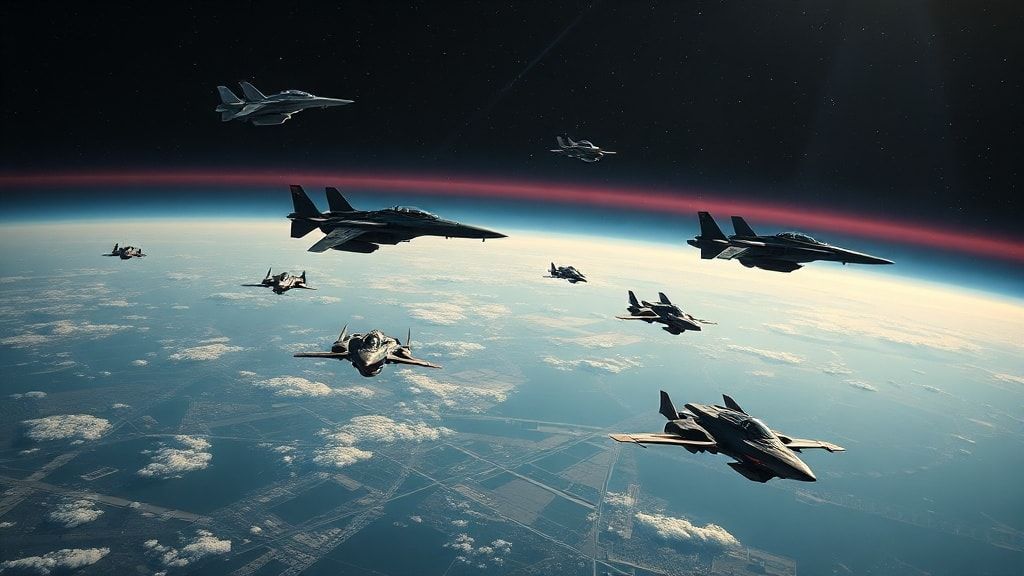
What drives thousands of players into the vast, virtual expanse of space to wage strategic battles that can last for hours or even days? The answer lies in the unique blend of intellect, patience, and quick thinking demanded by top-tier space strategy games. Far from simple shoot-’em-ups, these games challenge participants to command fleets, manage resources, and outwit rivals across ever-expanding galaxies.
One standout example that captures this intense competition is the OGame Rapid Galaxy, a platform where speed and tactical precision collide. Here, seasoned players and newcomers alike engage in battles that test not only their strategic foresight but their ability to adapt under pressure. The rapid pace transforms traditional gameplay into a frenzied contest of wits and timing.
As this article unfolds, readers will explore the intricate history of space strategy games and meet the dominant players who command respect across interstellar arenas. It will also reveal the sophisticated tactics that decide victory or defeat, the evolving role of artificial intelligence, and shed light on the creative minds behind these captivating universes. For anyone intrigued by the intersection of technology, competition, and space, the journey promises to be as thrilling as it is enlightening.
Charting the Cosmos: The Evolution of Space Strategy Games
Space strategy games have come a long way since their early text-based origins in the 1980s. What began as simple, turn-driven simulations gradually transformed into complex, real-time universes where players manage fleets, resources, and alliances. The genre’s rise parallels advances in computer processing power, allowing games to simulate vast galaxies and intricate economies with increasing realism. Modern titles have moved beyond isolated battles to incorporate diplomacy, espionage, and technology research, creating dynamic, player-driven experiences.
- 🚀 Early games focused on resource allocation and turn-based tactics.
- 🌌 The introduction of real-time gameplay added urgency and strategy depth.
- 👾 Multiplayer capabilities expanded the competitive and cooperative spectrum.
One notable example driving the genre’s popularity is OGame Fast War. It showcases how browser-based platforms can offer robust strategic gameplay without demanding high-end hardware. Players engage in rapid, intense battles, managing fleets and colonies in a persistent universe where every decision impacts their standing. Such accessibility has broadened the player base, bridging casual and hardcore communities alike.
| Era | Gameplay Style | Key Features |
|---|---|---|
| 1980s-1990s | Turn-Based | Basic resource management, limited graphics |
| 2000s | Real-Time Strategy | Multiplayer modes, detailed fleet combat |
| 2010s-Present | Persistent Universes | Diplomacy, espionage, research trees |
Today’s space strategy games often blur lines between genres, incorporating elements from RPGs, MMOs, and even survival games. This evolution reflects not just technological progress but a growing appetite for immersive experiences that challenge players’ tactical thinking over months or years. The appeal lies in the balance between long-term planning and unpredictable encounters — a formula that top-tier games continue to refine.
💡 Pro Tip: For newcomers interested in quick engagement with strategic depth, platforms like OGame Fast War offer a fast-paced yet thoughtful introduction to space strategy combat.
Masters of the Universe: Profiling the Top Players Who Dominate the Battlefield
In the fiercely competitive arena of top-tier space strategy battles, a select group of players consistently outpace their peers through razor-sharp tactics and relentless dedication. These masters exhibit a deep understanding of both resource management and battlefield dynamics, often shaping the metagame by anticipating opponents’ moves several steps ahead. Their influence extends beyond mere gameplay—they actively contribute to the community and set the benchmarks for excellence.
- 🎯 Consistently analyze opponents’ strategies and adapt accordingly
- ⚡ Prioritize efficient resource allocation for sustained growth and rapid fleet deployment
- 🔑 Forge alliances that provide both tactical and intelligence advantages
- 💡 Master timing attacks to exploit enemy vulnerabilities
- 📌 Stay updated on new developments within platforms like OGame Prime Battle to refine tactics
Among the elite, the ability to balance long-term strategy with short-term tactical decisions distinguishes the best from the rest. Success doesn’t come from sheer firepower alone — it hinges on precision, patience, and adaptability. Top players often utilize detailed scouting reports and simulation tools to anticipate enemy moves and prepare countermeasures swiftly. Their engagement on forums and dedicated servers, such as the highly competitive OGame Elite Server, allows them to both learn and influence ongoing trends within the community.
| Attribute | Top Player Approach | Typical Novice Approach |
|---|---|---|
| Resource Management | Strategic, efficient, long-term planning | Ad hoc, short-term focus |
| Alliance Building | Selective, mutually beneficial partnerships | Casual or absent cooperation |
| Tactical Execution | Calculated, timing-focused strikes | Random or impulsive attacks |
💡 Pro Tip: To emulate the success of top-tier commanders, focus on learning from their battle replays and actively participate in community discussions on dedicated platforms. This continuous exposure sharpens your situational awareness and decision-making under pressure.
Tactics Beyond Earth: The Complex Strategies That Win Wars Among the Stars
Mastering space strategy battles demands more than brute force; it requires a keen understanding of multifaceted tactics that unfold on a galactic scale. Commanders must juggle resource management, fleet composition, and technological upgrades while anticipating opponents’ maneuvers. Unlike traditional warfare, these confrontations occur in an environment where distances are vast, and timing can make or break a campaign.
- ⚡ Prioritize scouting to gain intel on enemy positions and fleet strength.
- ✅ Balance offense and defense, adapting your fleet to counter specific threats.
- 💡 Optimize resource allocation between research, shipbuilding, and defenses.
- 🔑 Exploit terrain—such as asteroid fields or nebulas—that affect movement and combat efficiency.
Innovations in gameplay continually push strategic depth to new heights. For instance, how new challenges elevate strategy gaming includes dynamic diplomacy systems and asymmetric unit abilities, requiring even seasoned players to rethink established tactics. Commanders on the OGame Elite Server often engage in prolonged battles that hinge on quick decision-making and clever deception.
| Strategy Aspect | Benefit | Trade-off |
|---|---|---|
| Resource Hoarding | Secures long-term advantage | Slower immediate growth, vulnerable to raids |
| Rapid Expansion | Quick territorial control | Overextended defenses, logistical strain |
| Stealth Attacks | Surprise and disruption | High risk if detected early |
Effective commanders also master timing, launching surprise strikes when enemies are distracted or resource-poor. Space warfare demands adaptability; rigid strategies often falter under the pressure of unpredictability and player ingenuity. Coordinated alliances further complicate matters as spies and counterintelligence become vital components.
💡 Pro Tip: Building a flexible fleet mix—incorporating scouts, fast raiders, and heavy cruisers—allows quick adaptation during battles, turning the tide before the opponent can respond.
Tech and Tactics: How Cutting-Edge AI is Changing Space Combat Forever
The integration of advanced artificial intelligence in space strategy games has reshaped how players approach combat scenarios, bringing a new depth to tactical planning and execution. AI-driven adversaries adapt dynamically to player actions, forcing a constant evolution of strategies rather than relying on static, predictable patterns. This shift has made battles more intense and less formulaic, highlighting a blend of pre-planning and on-the-fly decision-making that keeps even veteran players on edge.
- 🎯 Use AI learning patterns to anticipate enemy moves and counter effectively.
- ⚡ Prioritize upgrading AI-assisted units for faster reaction times in engagements.
- 💡 Deploy decoys or misinformation tactics to confuse adaptive AI opponents.
- ✅ Balance resource allocation between offensive capabilities and AI tech upgrades.
One fascinating aspect is how AI not only controls enemy fleets but also aids players in managing complex logistics and battlefield intelligence. For example, the analysis of hidden strategies in the OGame Elite Server reveals how AI tools provide real-time data parsing and predictive analytics, giving commanders a competitive edge. This assistance transforms space combat from raw aggression into a nuanced chess match with countless variables.
| Feature | Traditional Strategy | AI-Enhanced Strategy |
|---|---|---|
| Enemy Prediction | Static behavior patterns | Adaptive learning and forecasting |
| Resource Management | Manual calculations, slow decisions | Automated allocation and optimization |
| Battlefield Awareness | Limited intel, player-dependent | Real-time data fusion and alerts |
💡 Pro Tip: Leveraging AI’s predictive capabilities can reveal enemy weaknesses before they become obvious, allowing you to strike decisively and conserve precious resources.
Ultimately, the rise of AI in top-tier space strategy titles is expanding what’s possible on virtual battlefields. Players must now think like commanders who understand machine intelligence—not just soldiers firing blindly. This evolution promises not only more thrilling encounters but a continual push towards smarter, deeper gameplay that challenges every aspect of strategic thinking.
Behind the Scenes: The Developers Crafting Epic Interstellar Showdowns
The masterminds behind top-tier space strategy battles are a blend of visionary developers, skilled designers, and dedicated programmers. Their challenge? To create a universe complex and dynamic enough to simulate deep tactical warfare, yet accessible to newcomers and veterans alike. Behind every successful interstellar showdown lies a painstaking balance of gameplay mechanics, narrative depth, and technical execution.
- ✅ Continuous balancing of faction strengths to ensure fair play
- ⚡ Frequent updates to introduce new technologies, ships, and strategies
- 💡 Robust server management to handle thousands of concurrent battles
- 📌 Community engagement to incorporate player feedback into development
Developers often work in close consultation with experienced players to fine-tune complex systems like resource management, fleet composition, and alliance diplomacy. This collaboration enriches the gameplay and sustains a loyal base of enthusiasts. For anyone looking to understand the nuances that define these games, mastering quick decision-making and strategic foresight is essential — a concept well explained in resources about how to master the art of instant strategy in online space empires. Such knowledge deeply connects players to the developers’ vision of fast-paced yet thoughtful combat.
| Developer Role | Primary Focus | Key Contribution |
|---|---|---|
| Game Designers | Gameplay Mechanics | Creating engaging and balanced battle systems |
| Programmers | Technical Implementation | Building stable, scalable multiplayer infrastructure |
| Community Managers | Player Interaction | Gathering feedback and nurturing the player base |
Ultimately, these developers are crafting more than just games; they’re creating social and competitive ecosystems that flourish with player creativity and strategy. The ongoing evolution in this genre showcases how innovation and player dedication intersect to keep these virtual galaxies alive and constantly expanding.
💡 Pro Tip: Developers emphasize clear tutorials and incremental learning curves to help new players quickly engage in the complex world of space strategy battles, closing the gap between casual gamers and hardcore strategists.
Charting New Frontiers in Space Strategy
The world of top-tier space strategy battles continues to expand, blending intense player rivalry with ever-advancing technology. These games are no longer just about commanding fleets—they demand foresight, adaptability, and a deep understanding of both human psychology and cutting-edge AI. Behind every epic clash lies countless hours of meticulous coding, balancing acts, and community engagement from developers who are passionate about crafting truly immersive interstellar experiences.
As the barriers between player and machine blur, and strategy grows more sophisticated, one must wonder where the next breakthroughs will come from. Will AI continue to redefine what’s possible on the digital battlefield, or will human ingenuity find new ways to outsmart even the smartest algorithms? For those intrigued by the complex dance of tactics and technology, the OGame Elite Server represents both a battleground and proving ground—where legends are made and space strategy reaches its peak.
Ultimately, these immersive universes offer more than just entertainment; they challenge players and developers alike to think bigger, move faster, and aim higher. The cosmos is vast—but so too are the possibilities for strategic genius waiting to be unlocked.
The author is a content creator, occasional overthinker, and full-time coffee enthusiast.
To gain a deeper understanding of space strategy developments, consider exploring this insightful article on navigating the universe of space strategy, offering timely analysis relevant to current events and strategic planning.